
// Refine Your Plane’s Finish
aircraft Paint Correction Service in Horseshoe Bay, TX
Royal Clean Aviation offers premium plane paint correction service in Horseshoe Bay, TX, refining dull, swirled, and oxidized aircraft finishes with a careful process built for better gloss and long-term surface care.

// Correct Oxidation, Swirl Marks, and Surface Defects
Horseshoe Bay, TX Paint Correction for Aircraft
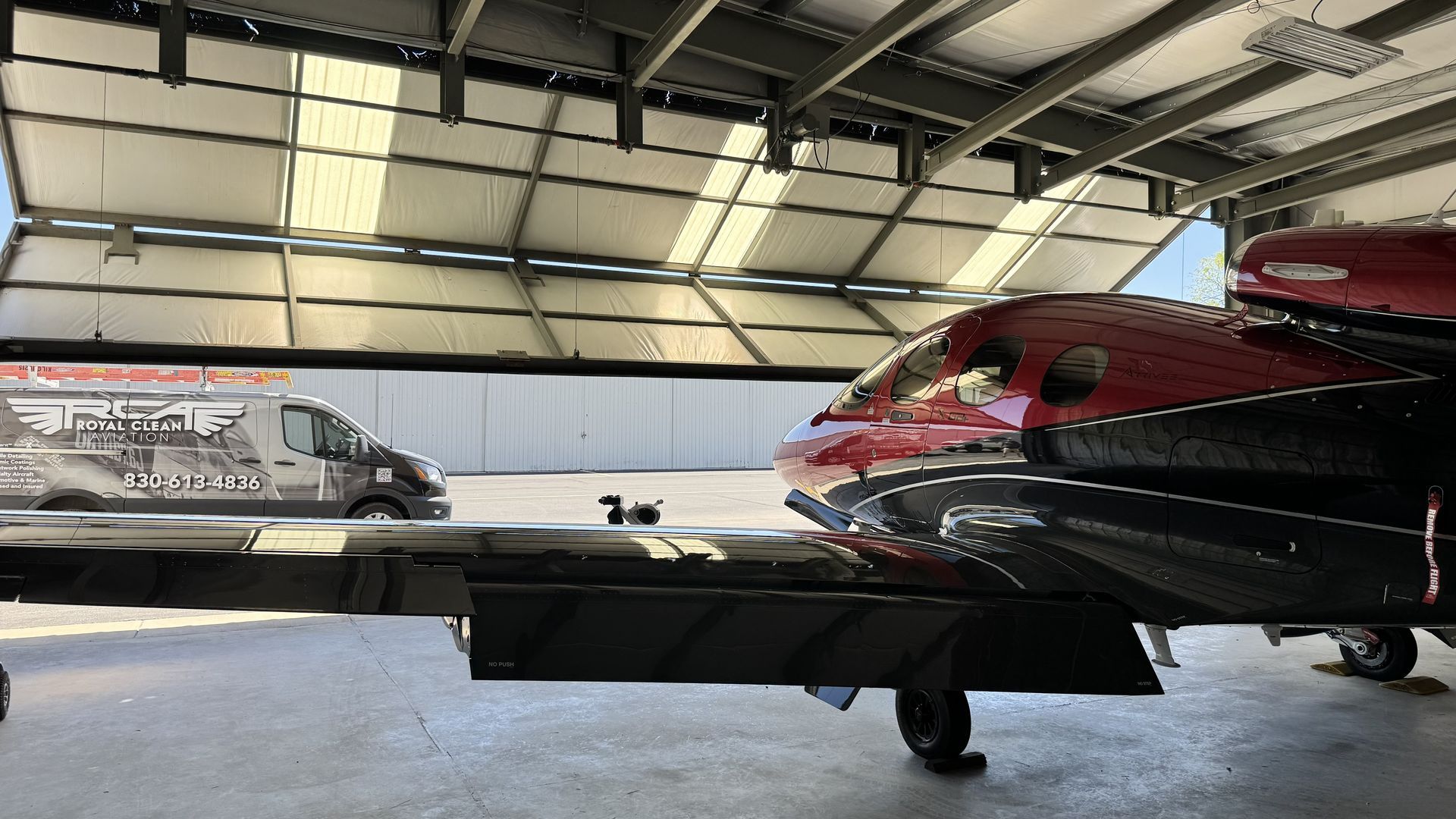
Aircraft paint takes a beating in Horseshoe Bay, TX. Sun, heat, bugs, oxidation, hangar dust, and years of washing can leave the finish looking dull, hazy, and tired. Our aircraft paint correction service helps clean it up with a careful polishing process built for aircraft surfaces. It’s how we bring back gloss, improve clarity, and give your aircraft the sharp, professional finish it deserves on the ramp.
// ROYAL CLEAN AVIATION
Paint Correction Packages
Stage 1 Paint Enhancement
THIS PACKAGE INCLUDES:
● Paint decontamination
● Stage 1 paint enhancement
● Aimed at 50%+ defect removal
● Includes silver package full exterior and interior detail
Stage 2 Paint Enhancement
THIS PACKAGE INCLUDES:
● Paint decontamination
● 2 step (or stage) compound and polish
● We aim for 90%+ defect removal
● Includes silver package full exterior and interior detail
Step 1: Aircraft Surface Inspection
Every paint correction starts with a close look at the aircraft’s finish. We inspect the paint for oxidation, swirl marks, staining, haze, and other defects that can drag down gloss. This helps us understand what the surface needs and what level of correction makes sense. For aircraft in Horseshoe Bay, TX, that first inspection matters because sun, heat, bugs, and ramp grime can all leave their mark.
Step 2: Careful Wash and Decontamination
Before correction starts, the surface needs to be clean. We wash the aircraft and remove bonded contamination that regular cleaning doesn’t always touch. That can include grime, residue, buildup, and other junk sitting on top of the finish. Paint correction shouldn’t grind contamination into the paint. It should start with a clean, properly prepped surface.
Step 3: Test Spot and Correction Plan
We don’t just grab a machine and start polishing. We perform a test spot to dial in the right pad, product, pressure, and process for that specific aircraft. Every finish can respond a little differently. The goal is to improve the paint as safely and effectively as possible, not overwork the surface just to chase a number.
Step 4: Machine Polishing
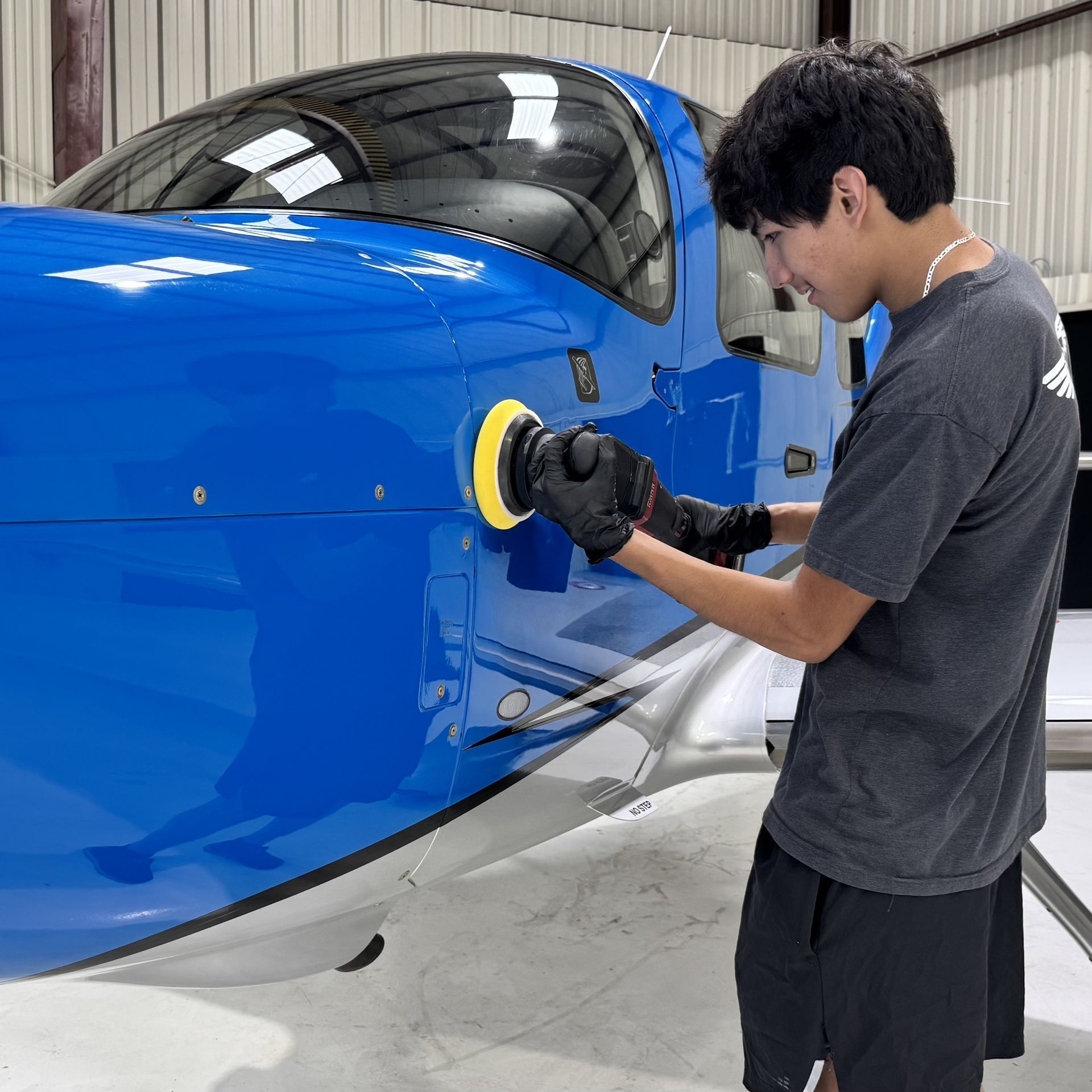
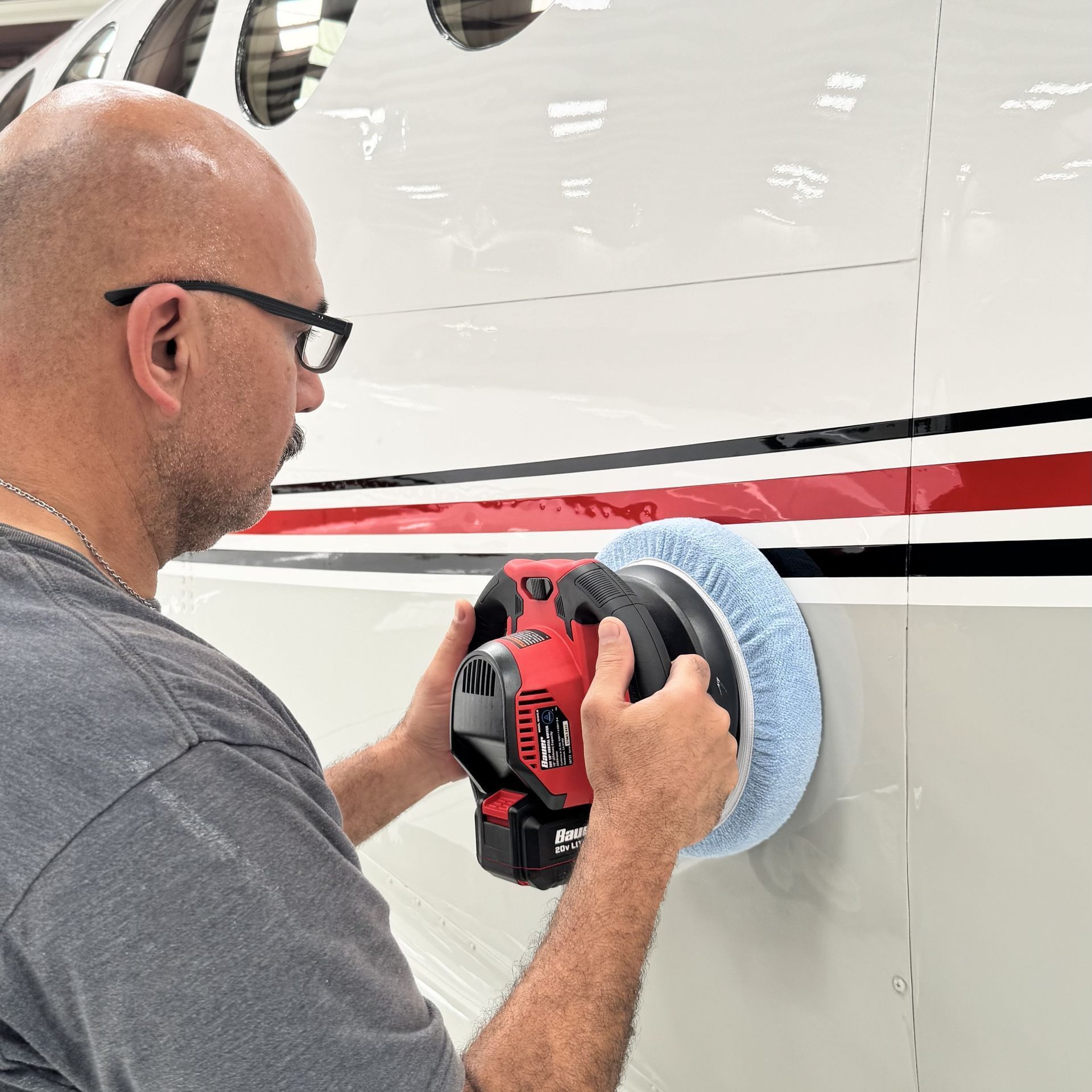
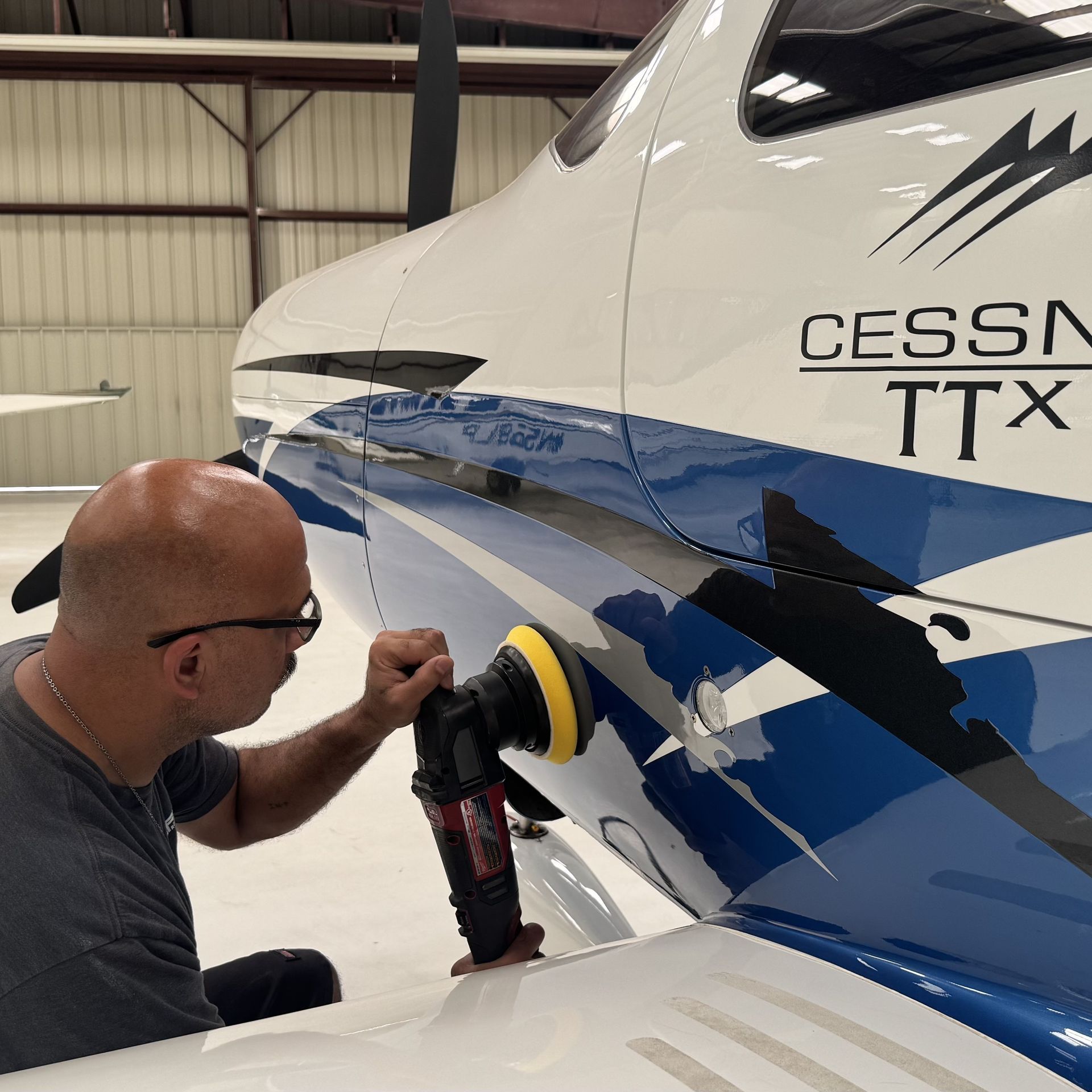
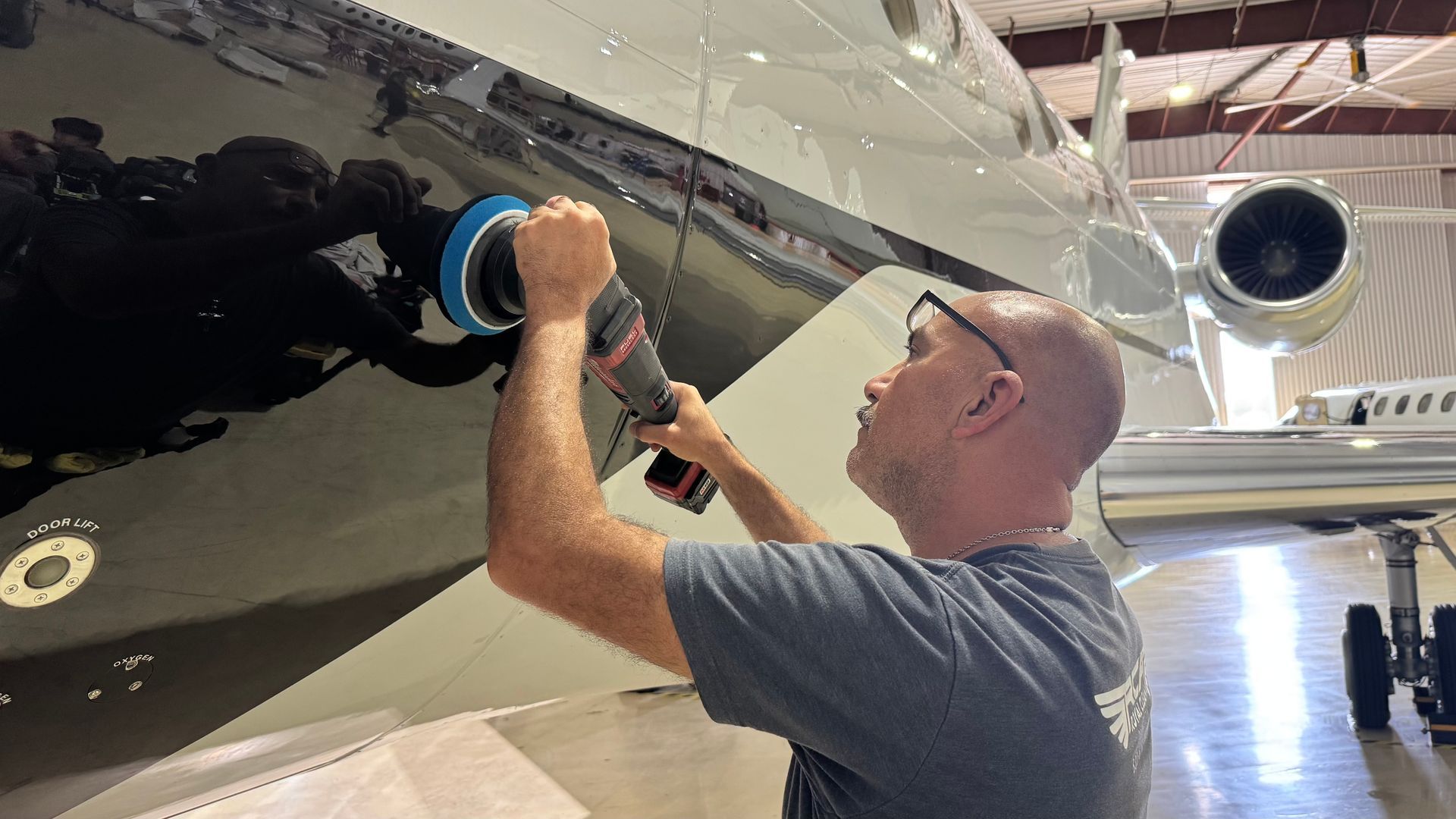
Once the process is set, we begin machine polishing the aircraft’s painted surfaces. This is where we refine defects like swirl marks, oxidation, light scratches, and dullness. Stage 1 paint enhancement focuses on a strong visual improvement, while Stage 2 paint correction goes deeper with a compound and polish process. Either way, the goal is cleaner reflection, better gloss, and a finish that looks properly cared for.
Step 5: Final Refinement
After the correction work is complete, we refine the finish to bring out clarity and depth. This step helps smooth out the final look, improve reflectivity, and create that polished presentation aircraft owners want on the ramp. It’s the difference between paint that simply looks cleaner and paint that looks sharp, rich, and professionally corrected.
Step 6: Protection Recommendation
Paint correction improves the finish, but protection helps keep it that way. After correction, we’ll recommend the right surface protection based on the aircraft, its materials, and how it’s used. It’s not about pushing the same answer every time. It’s about helping your aircraft hold onto that gloss, clean up easier, and stay presentation-ready longer.
Step 1: Aircraft Surface Inspection
Every paint correction starts with a close look at the aircraft’s finish. We inspect the paint for oxidation, swirl marks, staining, haze, and other defects that can drag down gloss. This helps us understand what the surface needs and what level of correction makes sense. For aircraft in Horseshoe Bay, TX, that first inspection matters because sun, heat, bugs, and ramp grime can all leave their mark.
Step 2: Careful Wash and Decontamination
Before correction starts, the surface needs to be clean. We wash the aircraft and remove bonded contamination that regular cleaning doesn’t always touch. That can include grime, residue, buildup, and other junk sitting on top of the finish. Paint correction shouldn’t grind contamination into the paint. It should start with a clean, properly prepped surface.
Step 3: Test Spot and Correction Plan
We don’t just grab a machine and start polishing. We perform a test spot to dial in the right pad, product, pressure, and process for that specific aircraft. Every finish can respond a little differently. The goal is to improve the paint as safely and effectively as possible, not overwork the surface just to chase a number.
Step 4: Machine Polishing
Once the process is set, we begin machine polishing the aircraft’s painted surfaces. This is where we refine defects like swirl marks, oxidation, light scratches, and dullness. Stage 1 paint enhancement focuses on a strong visual improvement, while Stage 2 paint correction goes deeper with a compound and polish process. Either way, the goal is cleaner reflection, better gloss, and a finish that looks properly cared for.
Step 5: Final Refinement
After the correction work is complete, we refine the finish to bring out clarity and depth. This step helps smooth out the final look, improve reflectivity, and create that polished presentation aircraft owners want on the ramp. It’s the difference between paint that simply looks cleaner and paint that looks sharp, rich, and professionally corrected.
Step 6: Protection Recommendation
Paint correction improves the finish, but protection helps keep it that way. After correction, we’ll recommend the right surface protection based on the aircraft, its materials, and how it’s used. It’s not about pushing the same answer every time. It’s about helping your aircraft hold onto that gloss, clean up easier, and stay presentation-ready longer.
// AVIATION PAINT CORRECTION DETAILS
Learn More About Paint Correction for Airplanes
What is aircraft paint correction?
Plane paint correction is a polishing process that helps remove or reduce defects in your aircraft’s painted surfaces. That can include oxidation, swirl marks, haze, light scratches, staining, and dullness. It’s not a quick wipe-down or basic shine-up. It’s a more detailed process built to improve gloss, clarity, and overall presentation for aircraft in Horseshoe Bay, TX.
What’s the difference between paint enhancement and paint correction?
Paint enhancement is a lighter correction service focused on improving gloss and cleaning up the overall appearance of the finish. It’s a great fit when the aircraft doesn’t need heavy defect removal. Paint correction goes deeper with a more involved polishing process to address more noticeable defects. If your aircraft has heavier oxidation, swirling, or dullness, we’ll usually recommend the stronger correction option.
Will paint correction remove every defect?
Not always, and that’s the honest answer. Some defects are too deep to safely remove, especially if they’ve cut too far into the finish. Our goal is to improve the surface while protecting the integrity of the paint. That means we’ll chase clarity and gloss, but we won’t overwork the finish just to force a result that shouldn’t be forced.
How long does aircraft paint correction take?
Turnaround depends on the aircraft, the size of the job, and the condition of the paint. A lighter enhancement may move faster, while deeper correction can take more time because the process is more involved. We inspect the aircraft first, build the correction plan, and make sure the work is done with care. It’s precision work, not a race.
Should I add surface protection after paint correction?
Yes, it’s usually a smart move. Paint correction improves the finish, but surface protection helps preserve that improvement. Once the paint is corrected, a protective coating can help reduce buildup, support easier cleaning, and keep the aircraft looking sharper between maintenance services. For aircraft owners in Horseshoe Bay, TX, it’s a strong way to get more long-term value from the correction work.
